Power & Charging
Best Car Power Inverters for Camping & Off-Grid Use 2025
The best car power inverter picks — clean power for laptops, small appliances and off-grid gear, with simple wattage guidance and safer “pure sine” recommendations.
This article contains affiliate links. We may earn a small commission at no extra cost to you. This helps support DriveTechGear.
Car power inverters for camping & off-grid use
Camping, van life and off-grid driving demand more from your power setup than everyday car use. This guide covers the best car power inverters for camping & off-grid use in 2025, focusing on stable output, realistic wattage and safer pure sine wave options.
We prioritise inverters that work well for laptops, camera gear, small appliances and longer charging sessions at camp — without overstressing your car’s 12V system. You’ll also find clear guidance on when a simple plug-in inverter is enough, and when proper battery wiring is required.
If you mainly need fast phone or laptop charging without AC power, a USB-C car charger or power bank may be the better choice. This page is for drivers who specifically need reliable AC power while camping.
Quick picks – best car power inverters
Short on time? These are the safest, most useful inverters for 2025.
Best Overall
Compact Pure Sine Inverter
Great for laptop charging, cameras, lights and small campsite electronics.
View best price →Best Pure Sine Upgrade
Pure Sine Inverter (More Headroom)
Cleaner power for sensitive chargers and longer sessions at camp.
View best price →Best High-Power (Battery Wired)
High-Watt Pure Sine Inverter
For bigger loads — only if you wire to the battery with proper fuse & cables.
View best price →How to choose the right car power inverter for camping
1) Match the wattage to what you actually run
A car power inverter should cover your device’s peak wattage (not just average). Use this as a practical camping guide:
- 150–300W: laptop chargers, camera battery chargers, lights, small electronics
- 400–700W: stronger laptop bricks, multiple devices, longer work sessions
- 1000W+: only for advanced setups (battery wiring, heat, fuse, thick cables)
2) Pure sine vs modified sine
For camping, pure sine wave is the safer choice for modern chargers, sensitive electronics and devices that buzz or get hot. It’s cleaner AC power and typically reduces weird issues in the field.
3) Don’t overload the 12V socket
Many cars limit the 12V outlet to around 10–15A — roughly 120–180W usable power before fuses/heat become a risk. For higher wattage, pick an inverter designed to connect to the battery (and install it correctly).
4) Camping reality check: inverters + fridges
Running a compressor camping fridge on an inverter is often inefficient. Most 12V car fridges are better powered directly from 12/24V (or via a portable power station) instead of converting DC → AC → DC.
Detailed reviews

1) Compact Camping Inverter – Best Overall
The best all-round camping pick if you mainly want reliable AC for laptop charging, camera gear and small electronics. Keep it ventilated, avoid running at max load continuously, and you’ll have a simple “set-and-forget” solution.
- ✅ Great for laptop chargers & small campsite gear
- ✅ Easy to pack and store
- ✅ Ideal for occasional AC needs while camping
Best for: weekend trips, basic off-grid charging, light AC use.
View Best Price →
2) Compact AC Inverter – Best Budget Camping Option
A solid choice if you just need occasional AC power at camp. Great for chargers and smaller devices — but stay realistic: don’t push high-watt loads, and give it airflow.
- ✅ Affordable entry option
- ✅ Good for light charging tasks
- ✅ Handy backup for road trips & camping
Best for: budget setups, emergency AC, light loads.
View Best Price →
3) Pure Sine Wave Inverter – Best for Sensitive Electronics
If you want cleaner power for modern chargers, audio gear or anything that gets hot or noisy on cheap inverters, a pure sine unit is the smart camping upgrade.
- ✅ Cleaner AC output (pure sine)
- ✅ Better for modern laptop power bricks
- ✅ Often runs smoother with fewer issues
Best for: photographers, creators, remote work setups, “no drama” charging.
View Best Price →
4) Higher-Power Inverter – Best for Longer Sessions
Useful when you want more headroom for longer camping sessions or multiple devices. For anything beyond light loads, plan for proper battery connection and correct fusing.
- ✅ More wattage headroom
- ✅ Better for multi-device charging
- ✅ Stronger option for extended camping use
Best for: longer trips, heavier charging needs, multi-device setups.
View Best Price →
5) Multi-Port Camping Inverter – Best Convenience Pick
A practical camping-friendly style if you want an AC outlet plus extra charging options. Great for keeping cables tidy and charging multiple smaller devices without carrying extra adapters.
- ✅ Convenient for mixed charging (AC + smaller devices)
- ✅ Good travel-friendly layout
- ✅ Nice for family camping setups
Best for: family road trips, mixed-device charging, organized camping power.
View Best Price →
6) Heavy-Duty Camping Inverter – Best for Advanced Setups
High wattage is powerful — and risky if installed wrong. This is for users who know what they’re doing: proper battery wiring, fuse, thick cables, ventilation, and realistic load planning.
- ✅ Strong headroom for demanding loads
- ✅ Better for advanced camping power needs
- ✅ Most useful when battery-wired (not 12V socket)
Best for: advanced campers, tool charging, heavier AC loads (installed safely).
View Best Price →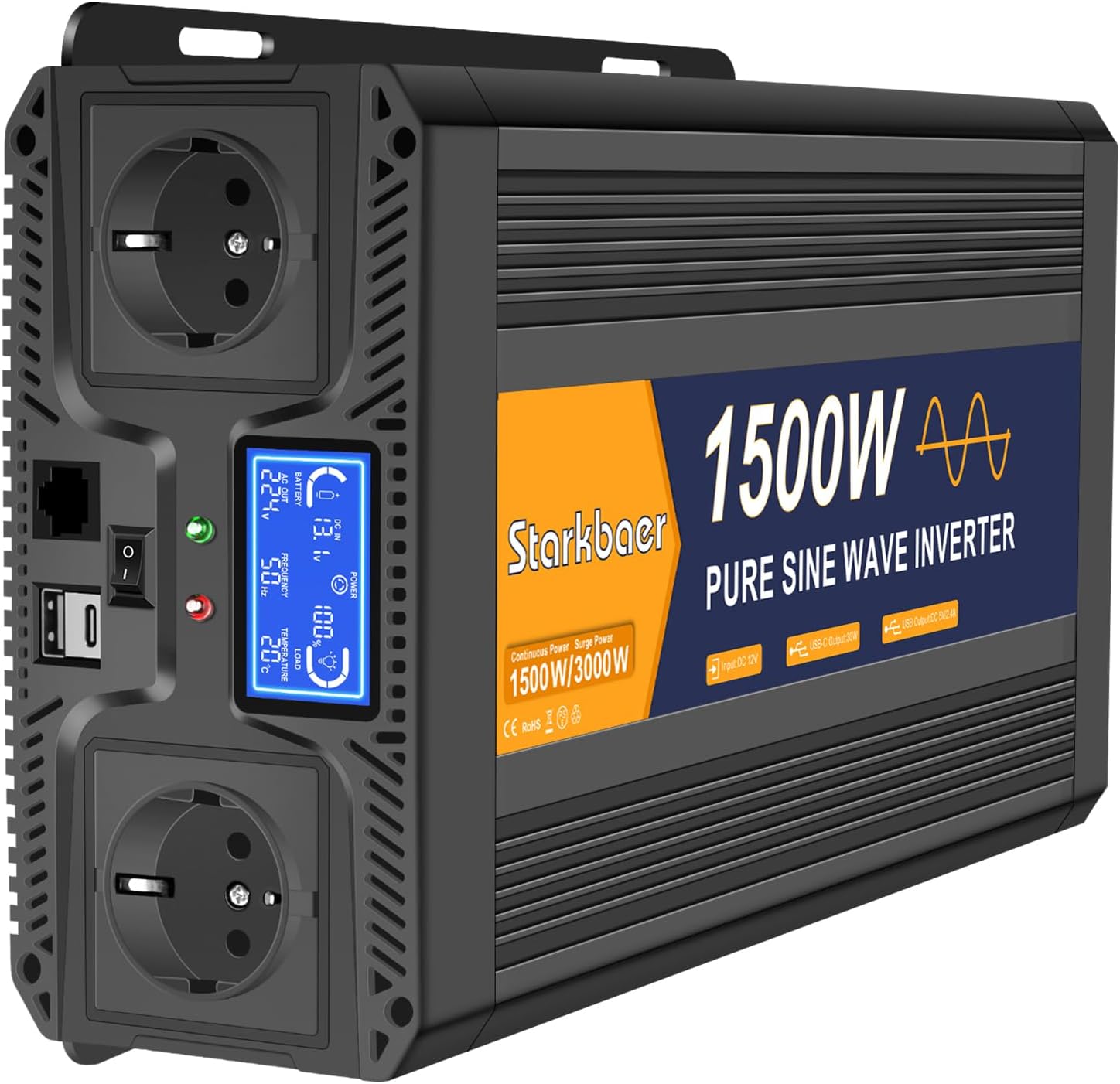
7) High-Watt Pure Sine Inverter – Best Premium Camping Pick
If you want maximum stability for camping electronics and you’re installing it properly, a high-watt pure sine inverter can be the “do it once, do it right” option.
- ✅ Clean power (pure sine)
- ✅ Great headroom for demanding chargers
- ✅ Best used with correct battery wiring + fuse
Best for: premium off-grid setups and serious camping use.
View Best Price →FAQ – Car power inverters for camping
What is a car power inverter?
A car power inverter converts your vehicle’s 12V DC into AC power (typically 230V in Europe), so you can plug in chargers and devices that normally use a wall outlet.
Is pure sine wave better for camping electronics?
Yes. Pure sine wave inverters provide cleaner AC power and are generally safer for modern chargers, audio gear and sensitive electronics — especially on longer camping sessions.
Can I run a camping fridge from an inverter?
You can, but it’s often inefficient. Most camping fridges are best powered directly from 12/24V (or via a power station) instead of converting DC to AC.
Can I plug a high-watt inverter into the 12V socket?
Usually not. Most 12V sockets safely handle around 120–180W. For higher wattage, connect to the battery using proper fusing and correct cable thickness.
Will an inverter drain my car battery at camp?
Yes, potentially. Inverters can draw significant power. For longer sessions, run the engine or use a dedicated leisure battery / power station setup.
Updated: 2025
We independently test and recommend products. If you buy through our links, we may earn a small commission at no extra cost to you.