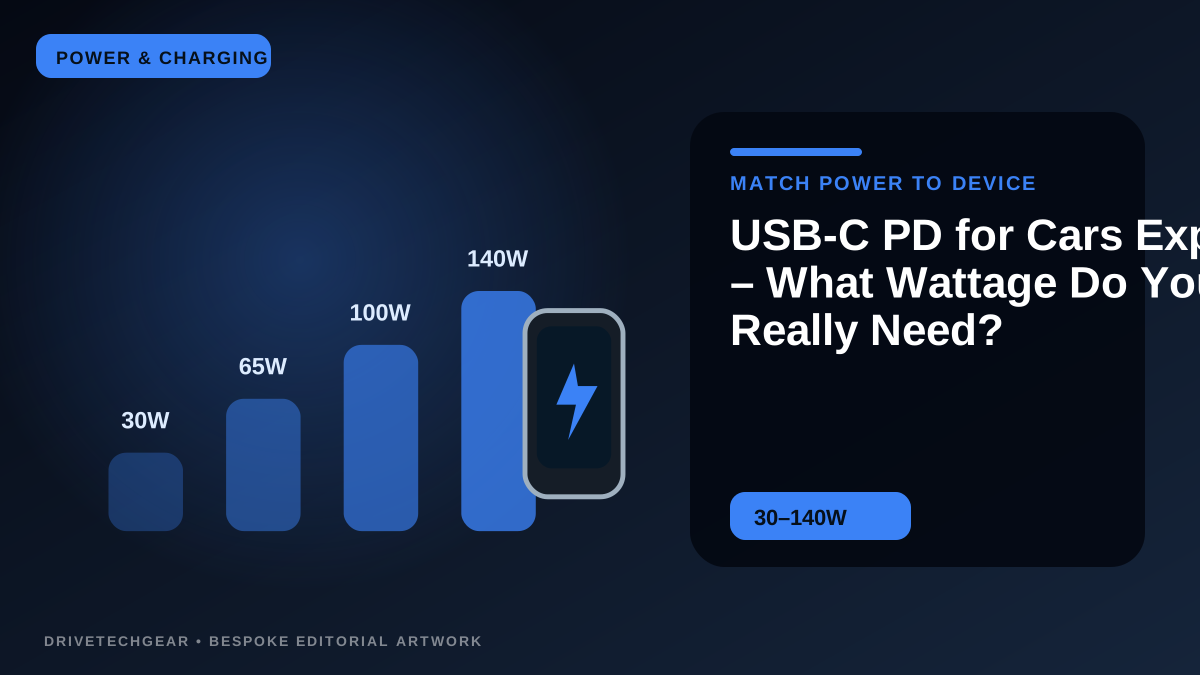
Power & Charging
USB-C PD for cars has become the standard for fast in-car charging, yet many drivers still don’t know how much power they actually need. Wattage numbers like 30W, 65W, or 100W+ matter far more than most people realize.
Why USB-C PD for cars matters
Many drivers plug in a USB-C cable and expect fast charging—only to discover their phone barely keeps up with navigation, music streaming, and hotspot use. The reason is usually simple: not enough wattage. USB-C Power Delivery (PD) lets your car charger and devices negotiate the right power, but only if your charger supports it properly.
If you want the best-performing charger picks, start here: Best GaN Car Chargers 2026 →
Helpful reference: USB-IF documentation library →
What is USB-C Power Delivery (PD)?
USB-C PD is a fast-charging standard that lets your charger and device communicate and agree on voltage and current. Instead of being locked to slow charging, PD can deliver much higher power—ideal for modern phones, tablets, and laptops.
- Without PD: often slow charging (commonly ~10–12W in real-world use)
- With PD: higher power and smarter negotiation (depends on charger + cable + device)
How many watts do you really need?
Choose wattage based on what you charge most often. The goal is not just “fast charging” once—it's consistent charging while you drive.
📱 Phones: 20–30W
Enough for fast charging on most iPhones and Android phones. Ideal for commuters and everyday driving.
📲 Tablets & large phones: 30–45W
Better at keeping up with GPS navigation + streaming + hotspot without draining the battery.
💻 Laptops: 65–100W+
Required for MacBooks and many Windows ultrabooks that charge via USB-C PD. If you work from the car or road-trip often, aim for a charger with a dedicated high-watt USB-C port.
When should you upgrade your car charger?
- Your phone charges slowly while using navigation
- You travel with multiple devices (family, passengers)
- You want to charge a USB-C laptop in the car
- Your current charger gets very hot
- You still rely on old USB-A only adapters
In these cases, moving to a modern GaN charger with high-output USB-C PD makes a noticeable difference. See our top-rated GaN car chargers →
What is PPS—and why does it matter?
PPS (Programmable Power Supply) is part of USB-C PD that can improve charging efficiency by adjusting voltage dynamically. On supported phones (especially many Android models), PPS can reduce heat and help maintain higher charging speeds.
If you fast-charge daily, picking a charger with PD + PPS is usually a smart move.
Don’t forget the cable
Your charger is only as fast as your cable. For phones, most good USB-C cables work fine, but for laptops, choose a cable rated for high wattage.
- Look for “100W” (or higher) on the cable spec
- Prefer certified / reputable brands
- If charging laptops: avoid thin, unbranded cables
Common USB-C PD mistakes in cars
Even when drivers buy a charger labeled “fast,” disappointment is common. With USB-C PD for cars, the most frequent issue is picking a model that simply doesn’t output enough power for real driving use.
- Buying low-wattage chargers: 18–20W models struggle with navigation, hotspot use, or tablets.
- Ignoring PPS: supported phones may charge slower or run hotter on basic PD-only chargers.
- Using cheap cables: poor cables can limit wattage or disconnect under load.
- Overloading multi-port chargers: total output is shared between ports.
- Heat management: cheap chargers degrade faster in hot car interiors.
FAQ – USB-C PD for cars
Is USB-C always faster than USB-A?
Not automatically. USB-C enables PD/PPS, but the charger still needs enough wattage for your device.
Can my car handle a 100W charger?
Most modern vehicles can. Confirm 12V/24V support and choose reputable models for heat control.
Can I charge a laptop from my car with USB-C?
Yes—if your laptop supports USB-C PD and your charger outputs enough wattage (typically 65–100W+).
Is GaN really worth it?
Often yes. GaN designs are typically more efficient and compact, especially at higher power outputs.
Updated: February 2026
We independently recommend products. If you buy through our links, we may earn a small commission at no extra cost to you.